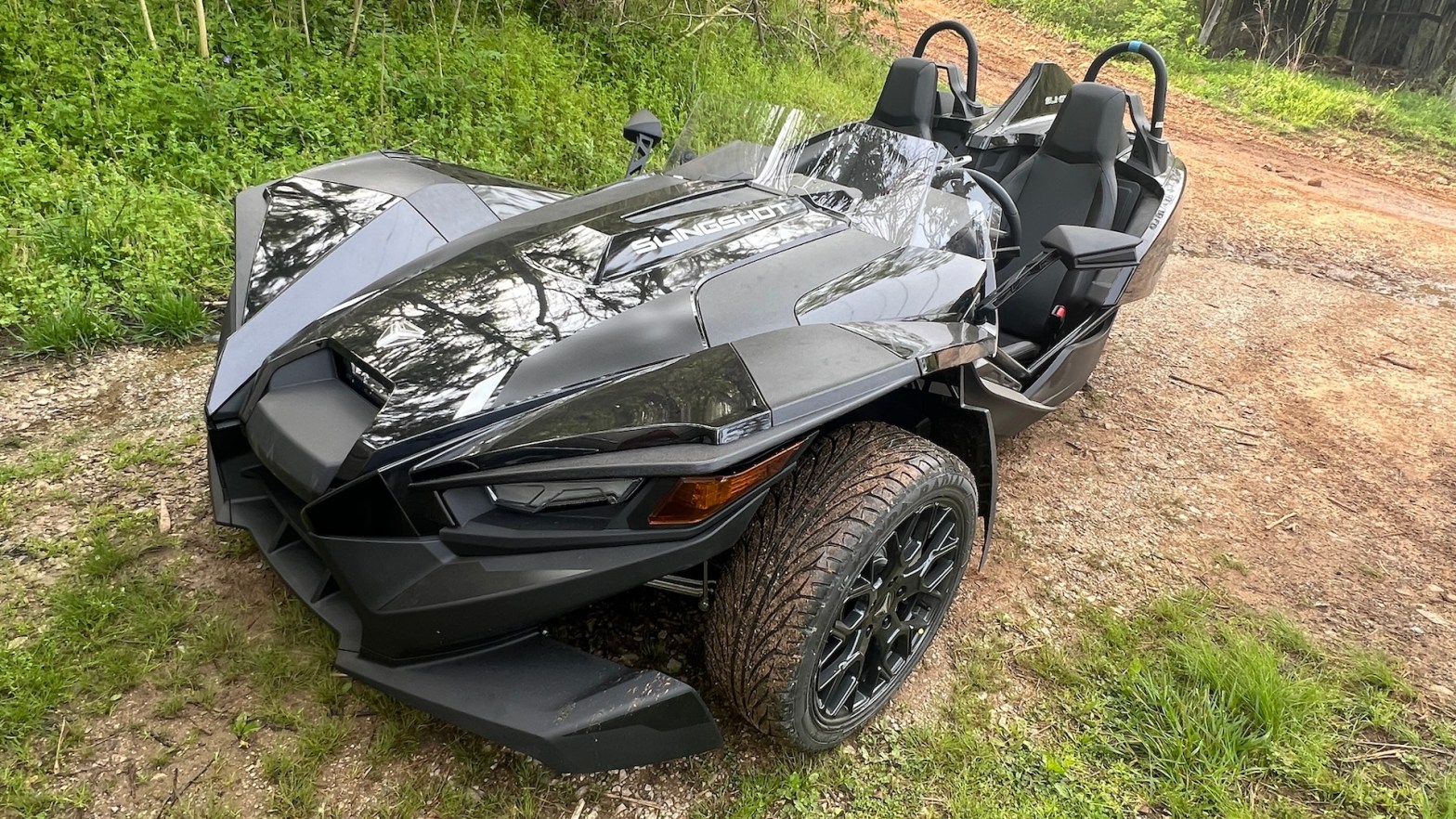
Well, here it is. I picked up the Slingshot yesterday and spent much of the day driving around and getting to know it. I’ll save the detailed review for the paid article(s), but I can give you some first impressions here.
It is not a motorcycle. It is also not a car. The Slingshot is its own unique thing. It has similarities to both cars and bikes, but it is not either of them. I had to build confidence in the single rear wheel, expecting it to tend toward oversteer with a smaller contact patch in the back than the two front wheels. But I found that confidence, mainly because the Slingshot corners almost completely flat, without the body roll I was accustomed to in Miatas. It’s also super low to the ground, with just 5.4 inches of clearance, and the seating position isn’t much higher than that. I have never used the phrase “it feels like a go-kart” more accurately than I do now. I mean that not only from the very responsive handling, but also from the low seating position.
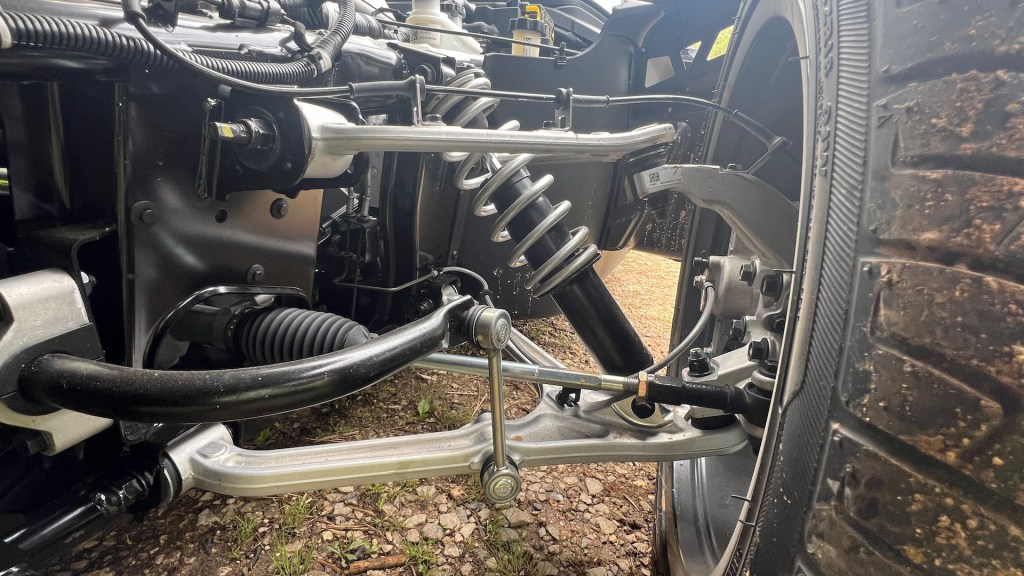
Up front is a double wishbone suspension with a thick anti-sway bar. This is identical to the suspension you find on many race cars due to its excellent handling characteristics.
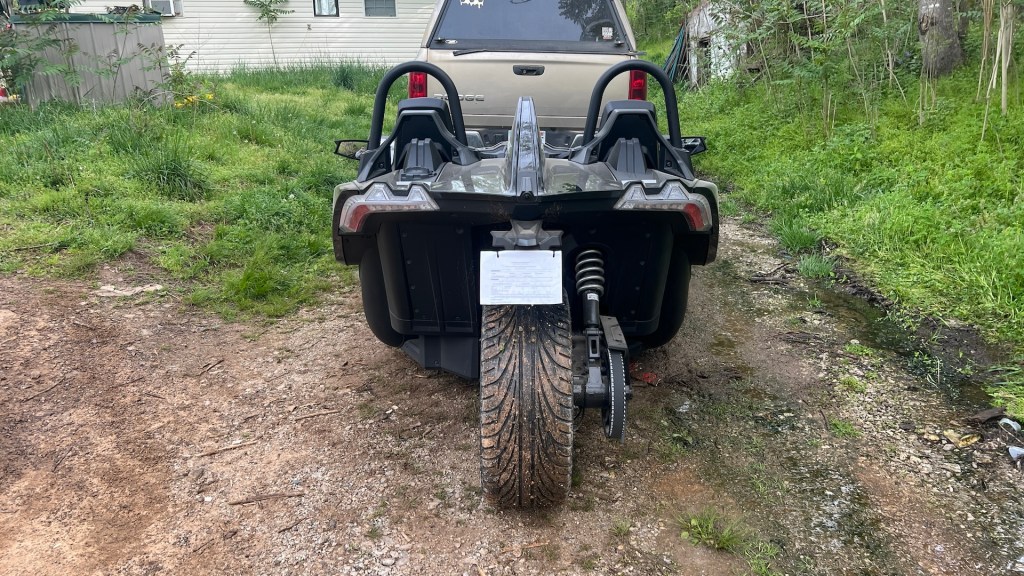
Out back is the part that most closely resembles a motorcycle, a single-sided swingarm with a coilover shock absorber, plus a belt drive just like an Indian motorcycle. This is a more sporty application, of course (except maybe for the dearly departed FTR1200), but Polaris got the tuning right, and it works.
All this makes it feel like you’re going much faster than you actually are. I took my wife for a spirited drive up Route 23 to Eureka Springs, a section of road that is almost nothing but corners of various types. I kept my speed to the 60-65 mph I usually go through here on my motorcycle, but she told me she looked over at the speedometer at one point because she thought I was going much faster.
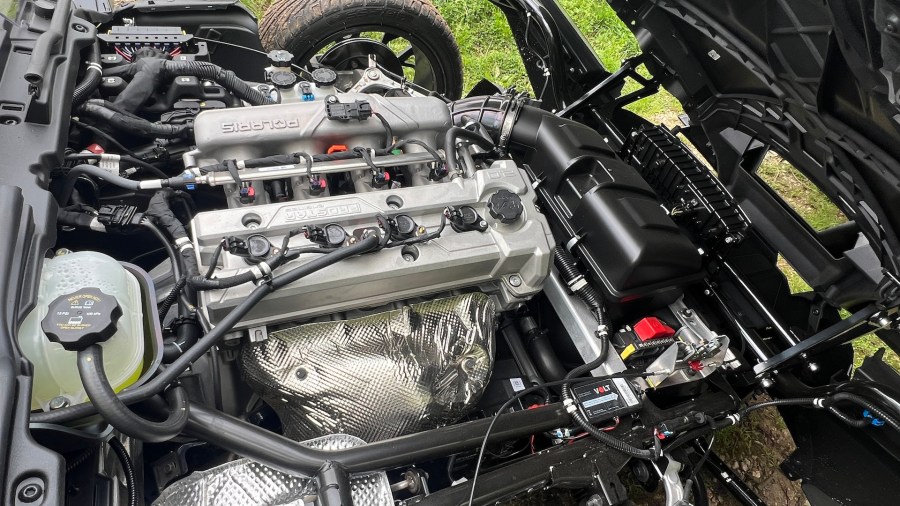
One way the Slingshot resembles a Miata is that it has enough power–not too little, but not a lot, either. The SL model I have is detuned to about 180 hp, while higher models get 203 with nothing more than a better engine tune on the Polaris 2.0L inline-four. It also weighs just 1,641 lbs, so a little power goes a long way.
This is also the first vehicle of any kind I’ve driven or ridden where I’ve found the various drive/ride modes useful to switch between on the fly. In my camper van, I normally cruise in “Normal,” use “Tow/Haul” when towing the trailer, and switch to “Slippery” going in and out of the dirt road we live on, and that’s it. The Slingshot has only two modes, “Comfort” and “Slingshot” (what it calls sport mode). They don’t change the suspension, only the throttle response and the level of steering assistance. But those differences have a huge effect, especially on the steering. I’ve always felt that if I want more throttle, I can just push my foot farther down on the pedal, and don’t need a different engine map to do it for me. In the Slingshot, though, Comfort mode makes it easy to drive around town without unintended rapid acceleration. Maneuvering around tight corners is easy with a high level of steering assist, but handling is a bit too twitchy for my taste as the speed increases.
That’s what Slingshot mode is for. The first thing I noticed was the faster throttle response, which is fun at higher speeds outside town. (Northwest Arkansas has long stretches of winding 55 mph highway between towns, a great place to open it up a bit.) It also reduces the amount of power steering assist, requiring more effort to turn the wheel. That eliminated the twitchy steering of Comfort mode. The firmer wheel feels just right, and I had a great deal of confidence diving into corners on Route 23 and accelerating out of them. It didn’t feel like my Miatas or my BRZ. It was something different. But all the techniques I learned from autocross and track days worked in this so-called “motorcycle.”

Even Polaris tries to convince us that “this is a motorcycle.” They strongly recommend wearing a full-face helmet while driving it. As part of my loan agreement with them, I am required to, regardless of Arkansas not mandating it by law. I don’t mind. Sitting so low does make you vulnerable to insects and road debris, just like a motorcycle. It’s also nearly impossible to converse with your passenger, especially with helmets on, unless you have helmet intercoms. Fortunately, we do, and put our Cardos to good use on this trip.
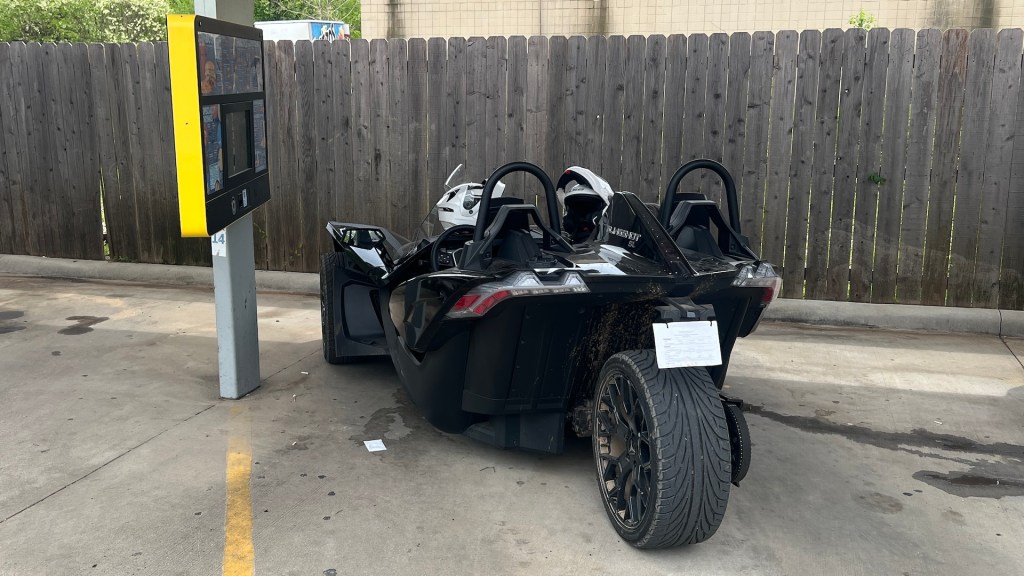
It wasn’t all high-speed shenanigans. We made the obligatory Sonic run, a frequent motorcycle stop for us. This time, we could stay in the vehicle yet still enjoy sitting outside.

We also ran a few errands. The Slingshot has no trunk, but behind each seat is a storage compartment large enough to put most full-face helmets. I say “most” because my Leatt ADV helmet didn’t fit because of its peak. The glove compartment is much larger than in any car I’ve seen, further expanding storage (remind me to get a photo for the review). All of these compartments lock for security.
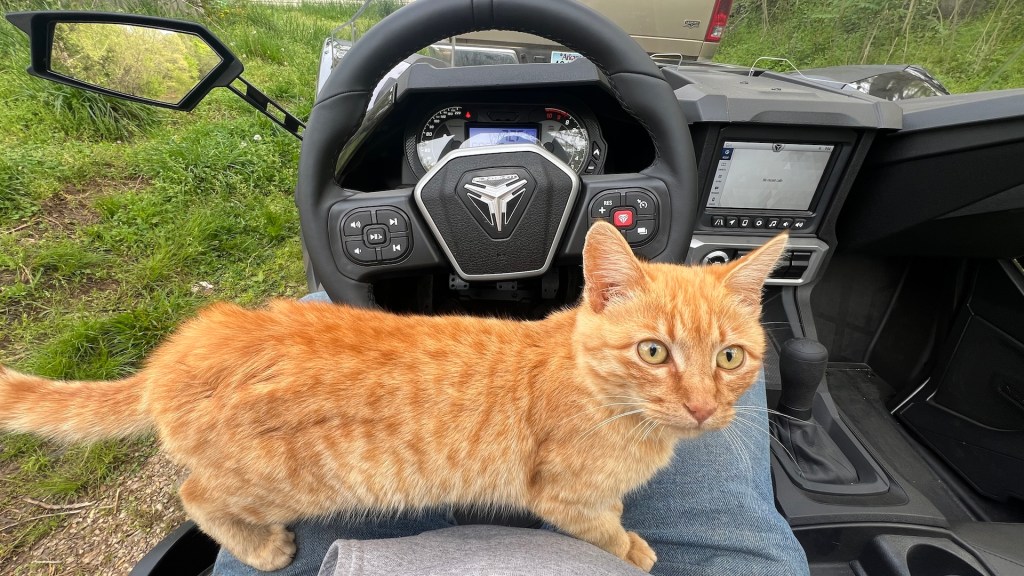
Despite being a Polaris product, Harley approves of the Slingshot. I suppose that’s the most important test, right there.
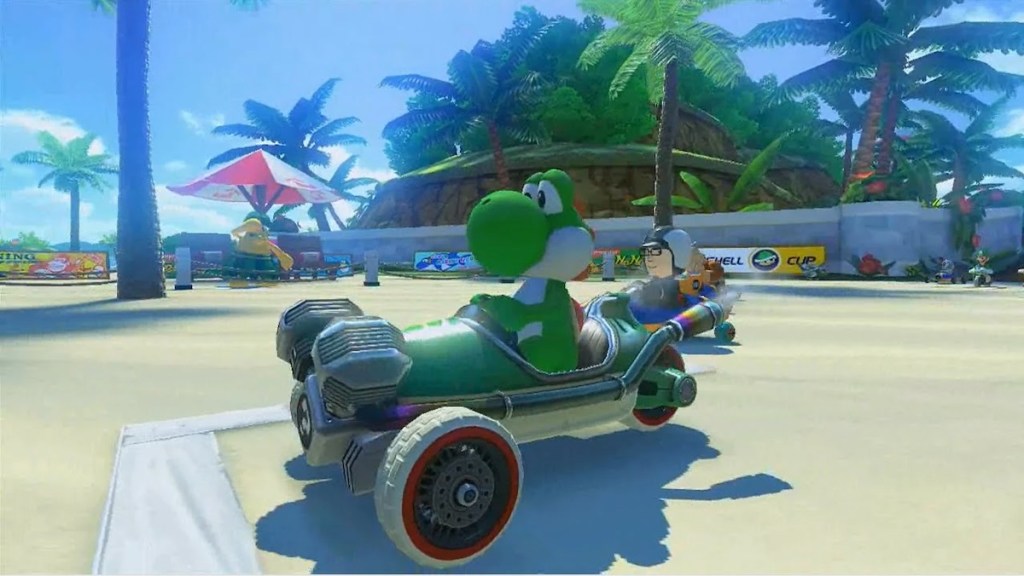
Last night, immediately after my first day in the Slingshot, Mario Kart unlocked a three-wheeler of its own for me. The V-twin engine hanging off the front clearly identifies it as a Morgan clone, but I appreciate the sentiment. Naturally, I drove this for the rest of the night.
I’m looking forward to exploring more of my favorite roads, routes, and destinations over the next two weeks. I’ll have to dodge some raindrops to do it, but I should get some good opportunities between April showers.
Discover more from Justin Hughes
Subscribe to get the latest posts sent to your email.
